In short
- Czym jest ATL marketing?: ATL marketing is an approach used mainly to build brand awareness and promote its values on a broad scale.
- How does ATL marketing work in practice?: ATL marketing uses four main channels, each with a different strength of impact: Television.
- Zalety i ograniczenia ATL marketingu: The basic advantage of ATL marketing is reach – nationwide and, with a suitable budget, even international.
- How do you measure the effect of an ATL campaign?: Since an ATL campaign has no single click to count, it needs different metrics from a BTL campaign.
Short answer
ATL marketing is advertising aimed at a broad audience through mass media such as television, radio, the press, posters and cinema. Its goal is usually to build brand recognition rather than to generate quick sales. The effect is harder to quantify than online, so it pays to decide in advance how you will judge it.
ATL marketing (above the line) means large-scale, untargeted campaigns in mass media – television, radio, the press and outdoor advertising – whose aim is to build brand awareness among as many people as possible. Unlike BTL marketing, it does not target an individual customer but the whole market at once.
- What is ATL Marketing?
- How does ATL marketing work in practice?
- Advantages and limitations of ATL marketing
- How do you measure the effect of an ATL campaign?
- Who should choose an ATL campaign?
- How much does an ATL campaign cost?
- The most common mistakes in ATL campaigns
- ATL marketing with Commplace: how we help
- Short answers to frequently asked questions
- ATL media and BTL communication: how to match channels to the campaign goal
ATL media are channels that reach a broad audience at once: television, radio, the press, outdoor advertising and cinema. BTL communication covers activities aimed at a narrower, selected group, such as events, sampling, direct marketing or point-of-sale promotions. An ATL campaign works best when the goal is to build brand recognition, and BTL activities when the aim is to trigger a specific response: trying a product, signing up or buying.
In practice many campaigns combine both approaches, which is sometimes called TTL communication. When choosing an advertising agency to run an ATL campaign, it is worth asking how it will combine broad reach with activities closer to sales and how it will assess the effect of each part. We write about BTL activities in our article on event marketing, and about combining multiple channels in our article on 360 agencies. If you are preparing a campaign, see kampanie reklamowe Commplace and marketing strategy.
Content updated: 2 November 2026.
How do you plan an ATL campaign in five steps?
- Set the goal: recognition, image or the launch of a new product.
- Describe your audience: who they are, where they spend their time, which media they use.
- Choose media that genuinely reach those people, not those that are best known.
- Prepare one simple message that can be remembered after a few exposures.
- Plan how you will evaluate the campaign before it starts.
A mass campaign makes sense when the brand has a broad circle of potential customers. With a narrow group, for example companies from one industry, wider media often mean spending on people who will never buy.
Table: ATL versus activities closer to sales
| Criterion | ATL | Direct activities |
|---|---|---|
| Reach | broad | narrow, selected |
| The main goal | recognizability | enquiry, purchase |
| Speed of effect | usually slower | usually faster |
| Ease of measurement | harder | easier |
| Cost of entry | usually higher | sometimes lower |
The two approaches can complement each other. Mass advertising builds familiarity, while direct activities turn interest into a sales conversation. Everything depends on budget and goal.
How do you judge ATL effectiveness without exact figures?
Because you are not tracking every individual recipient, you use several signals together. You can compare brand awareness in a survey before and after the campaign. You can watch the number of searches for the company name and of direct visits to the website. It is also worth asking new customers how they heard about you. None of these signals is proof on its own, but together they give a picture. Remember that season, competition and the company's other activities also affect the results.
Is ATL for a small business?
Usually not in its full nationwide form. Local radio, posters or the regional press can be a sensible choice if your customers live nearby.
Will ATL replace online activities?
No. It usually works best together with them. People who see an advert often go on to search for the brand online.
Where can I find more information?
We describe the range of possible media in the article where to advertise the company. You can read about setting objectives in the article advertising campaign goals, and about different forms of promotion in the article types of promotion.
How do you combine ATL with your other activities?
What is ATL Marketing?
ATL marketing is an approach used mainly to build brand awareness and promote its values on a broad scale. ATL campaigns are largely untargeted – the same television advert reaches all viewers of a given channel, regardless of age, interests or purchase history. This distinguishes ATL from precisely targeted activities, which we discuss in our article on definiowaniu grupy docelowej.
The aim of an ATL campaign is not a direct increase in sales or a specific conversion rate. It is general awareness of the brand's or product's existence among customers, and greater visibility in the market. That is why ATL results are harder to measure than those of BTL campaigns: there is no single click or form that shows directly how many people responded to the message. This does not mean the results cannot be assessed at all; we describe how to measure them later in this article.
ATL vs BTL marketing: the key difference
BTL marketing (below the line) is the opposite approach to ATL. Instead of a broad, untargeted message, BTL directs communication to selected, precisely identified people – potential customers. Typical BTL activities include direct marketing, email marketing, social media and the sponsorship of specific events.
| Feature | ATL marketing | BTL marketing |
|---|---|---|
| Recipient | a broad, undefined public | a selected, precisely defined group |
| The main goal | brand awareness, reach | conversion, measurable return on investment |
| Typical channels | television, radio, the press, outdoor advertising | email, social media, events, direct mail |
| Measuring the effect | hard to measure, indirect (awareness, reach) | direct (clicks, enquiries, sales) |
In practice, the line between ATL and BTL is often blurred today. Social media can work in both modes at once: a post visible to all followers is ATL in nature, while the same post shown as a precisely targeted paid advert works like BTL. Which approach a given activity belongs to depends on its intent and the goal it is meant to achieve, not on the channel itself.
Where does the name “above the line” come from?
The term “the line” separates, in marketing, direct, targeted campaigns from more general and widespread ones – campaigns that build brand awareness from those meant to deliver a measurable, direct return on investment. Over time a third term joined this division – TTL (through the line), which describes activities combining both approaches at once, e.g. product sampling, described in our poradniku o samplingu: it reaches many people like ATL, but every contact with the product is direct and measurable as in BTL.
Marketing keeps evolving, and the question increasingly arises whether the ATL/BTL divide is fading. The mass use of social media means the same communication channel can be used on a mass basis one moment (a post visible to all followers) and in a precisely targeted way the next (a paid advert aimed at a chosen segment). The key to deciding which approach we are dealing with is always the intent and goal of the specific activity, not the channel in which we run it.
How does ATL marketing work in practice?
ATL marketing uses four main channels, each with a different strength of impact:
Need a better communication strategy?
We recommend only the best solutions.
- Telewizja. Moving image combined with sound reaches the viewer more intensely than a static image or sound alone. The reach of a television advert may be local, national or international – depending on the channel and the agreement with the broadcaster.
- Radio. A consumer usually has to encounter an advertising message several times before it really sticks in the memory. Radio, like television, lets you combine broadcast frequency with reach – local, national or international.
- Prasa i magazyny. Trade magazines make it easier to reach specific professional niches or interests, although press advertising itself still counts as an ATL activity – it reaches all readers of a given title, not only selected people.
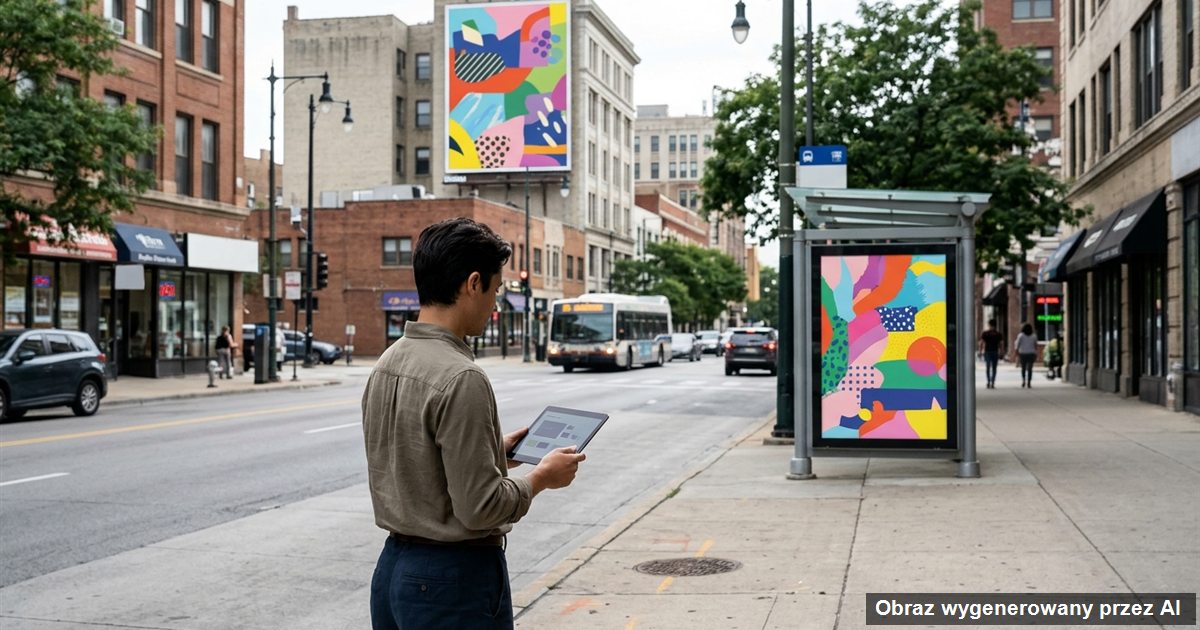
- Outdoor advertising (OOH). Billboards, citylights and banners work the better, the better their location – pedestrian and vehicle traffic at a given spot determines the real reach of the medium.
The four channels rarely work in isolation. A well-planned ATL campaign combines them into one coherent message – the same visual and the same slogan appear on television, on a billboard and in the press, so that the audience recognises the brand whichever medium they encounter it in. Without that consistency each channel works on its own, and the effect of the whole campaign is weaker than the sum of its parts.
Advantages and limitations of ATL marketing
The main advantage of ATL marketing is reach: nationwide and, with a sufficient budget, even international. Audiovisual material such as a television advert helps brands connect with a broad audience and build a coherent brand identity that customers then recognise in other channels. The role of ATL in brand building is to reach as many potential customers as possible and tell them about the brand and the benefits it can offer them.

The limitation is precisely the lack of precision. An ATL campaign does not distinguish a customer ready to buy from a person who will never use the offer – it reaches both in the same way. That is why an effective strategy usually combines ATL with BTL activities: broad reach builds awareness, and precisely targeted BTL materials lead a specific, interested customer to purchase. We write more about how to arrange such combinations of tools into a single whole in our article on marketing mix.
The second limitation is the cost of entry. Even a short nationwide television or radio campaign requires a budget that not every company can afford – and that is before the cost of producing the advertising material itself (the spot, the recording, the billboard artwork). For this reason it is worth deciding on an ATL campaign only once the company is clear about what an extra point of brand awareness is worth to it within a given audience – otherwise it is easy to overpay for reach that no one later turns into sales.
Example. A grocery chain is entering the national market with a new private-label brand. Instead of immediately investing in precisely targeted social media adverts, it opts for a short television campaign in a high-viewing slot and billboards along the main routes into large cities. Only after three weeks on air does the chain launch a BTL campaign – social media adverts aimed at customers who have shopped in its stores before – in order to turn the brand awareness it has built into actual store visits.
How do you measure the effect of an ATL campaign?
Since an ATL campaign has no single click to count, it needs different indicators from a BTL campaign. The media industry standards are:
- Reach – how many unique people were exposed to the advert in a given period.
- Frequency – how many times the average recipient encountered the message; too low a frequency means the message will not be remembered, too high that it will start to irritate.
- Brand awareness – usually measured by a survey before and after the campaign, shows whether more people recognise the brand and associate it with the right attributes.
- Change in traffic in the brand's owned channels – growth in website visits, Google searches for the brand name or the number of social media followers during the campaign period, compared with the period before its start.
A rise in these indicators during the campaign is a signal that it is working – but not proof of impact in itself. To be sure that it is the ATL campaign, and not another factor (seasonality, competitor activity, a price change), that is responsible for the change, compare the result with a baseline period before the campaign started or, where possible, with a region where the campaign did not run.
Who should choose an ATL campaign?
An ATL campaign works well in several specific business situations:

- Entering a new market. A brand unknown to a wide audience first needs to establish itself in people's minds before it starts to target specific segments precisely.
- Premiera produktu masowego. Products aimed at a broad customer base (e.g. fast-moving consumer goods) benefit from campaigns with large reach, because it is hard to define a single narrow target group in advance.
- Odbudowa wizerunku po kryzysie. When a brand needs to reach as wide an audience as possible quickly with the same, consistent message.
- Wzmocnienie pozycji lidera rynku. Companies that already hold a strong position use ATL to maintain brand visibility and not cede communication space to competitors.
Smaller companies with a limited budget and a narrowly defined target group usually do better with BTL campaigns – precisely targeted and easier to account for in terms of a specific effect. That does not mean, however, that ATL is reserved solely for large, nationwide brands. A smaller-scale ATL campaign – for example, on local radio and a few billboards in one city – also makes sense for a regionally operating company, if its goal is to build recognition among residents of a particular area rather than merely to reach a narrow segment of customers who could be identified precisely in advance.
How much does an ATL campaign cost?
The budget of an ATL campaign depends on three variables: reach (local, national, international), the duration of the campaign and the choice of media. Television campaigns usually generate the highest costs of all ATL channels, because the price depends on the viewership of the broadcast slot and the length of the spot. Radio or online advertising can be more affordable and allows more flexible budget management while the campaign is running.
Before setting a budget, it is worth comparing the cost of reaching a thousand people (known as CPT) across different media for a given period and location – it is the only way to compare television, radio and outdoor offers realistically, rather than guessing from the broadcast price alone.
It is also worth calculating the cost of an ATL campaign in relation to its goal, not just the price of the media. A campaign introducing a brand to a new market requires a different budget and airtime from one reminding people of a brand customers already know. The wider the geographical reach and the longer the campaign runs, the higher the budget – but also the harder it is to account precisely for the cost of one new customer, because a good deal of time usually passes between exposure to the advert and the purchase decision, and many other factors intervene.
The most common mistakes in ATL campaigns
- No single, consistent message. An ATL campaign in which television says one thing and a billboard another blurs brand identity instead of building it.
- Expecting immediate sales. Judging an ATL campaign by BTL metrics (the number of orders in the week after launch) leads to the wrong conclusion that the campaign “didn’t work”, even though its goal was awareness, not conversion.
- Airtime that is too short. A single airing of a TV spot rarely makes a message stick – it takes the right frequency of contact, spread over time.
- No BTL activity after the ATL campaign. Brand awareness that is never turned into any follow-up action (social media advertising, an offer, contact with the customer) fades over time without leaving any lasting effect.
ATL marketing with Commplace: how we help
W Commplace planujemy kampanie ATL jako część szerszego brandingu – tak, by szeroki zasięg reklamy telewizyjnej, radiowej czy outdoorowej wzmacniał tę samą tożsamość marki, którą klient później spotyka w social mediach i na stronie internetowej. Osobno docieramy do konkretnych klientów działaniami BTL, które prowadzą od świadomości marki do realnego kontaktu z ofertą. Zaczynamy zawsze od jednego pytania: co konkretnie ma się zmienić w głowie odbiorcy po kontakcie z kampanią, i dopiero do tej odpowiedzi dobieramy kanały, budżet i harmonogram emisji. Gdy kampania ma budować zaufanie do marki także poza reklamą, łączymy ją z działaniami public relations, czyli obecnością w mediach i komunikacją ekspertów firmy.
Progress, tasks, risks and metrics for a campaign like this can be followed in real time on the dashboard Commwork®AI – in one place, alongside the results of PR and social media activity, which makes it easier to link the effect of the ATL campaign to what is happening in parallel across the brand’s other communication channels. The decision on the direction of the campaign is always made by a human; AI only organises the data and keeps track of deadlines.
It is also worth reading: product sampling – how it works and when it pays off and types of marketing strategies, if you are wondering how ATL fits into the wider set of tools available to your company.
Short answers to frequently asked questions
What does ATL marketing mean?
ATL (above the line) is a marketing strategy based on mass, untargeted campaigns in media such as television, radio, the press and outdoor advertising, aimed at building brand awareness.
How does ATL differ from BTL marketing?
ATL reaches a broad, undefined audience and builds brand awareness. BTL directs the message to selected, precisely defined people and focuses on measurable return on investment and conversion.
Which channels does ATL marketing use?
Television, radio, the press and magazines, and outdoor advertising (billboards, citylights, banners). Each of these channels has a different reach and a different way of affecting the audience.
Who should opt for an ATL campaign?
Companies entering a new market, brands with a mass-market product and no narrowly defined target group, businesses rebuilding their image after a crisis, and market leaders who want to maintain brand visibility.
How much does an ATL campaign cost?
The cost depends on reach, campaign duration and the choice of media. Television campaigns are usually the most expensive, while radio or online advertising offers more budget flexibility.
Can ATL and BTL be combined in one campaign?
Yes, it is the most common approach. ATL's broad reach builds brand awareness, while precisely targeted BTL activities lead a specific, interested customer to purchase.
Sources: work of the Commplace blog editorial team.
ATL media and BTL communication: how to match channels to the campaign goal
ATL media are channels that reach a broad audience at once: television, radio, the press, outdoor advertising and cinema. BTL communication covers activities aimed at a narrower, selected group, such as events, sampling, direct marketing or point-of-sale promotions. An ATL campaign works best when the goal is to build brand recognition, and BTL activities when the aim is to trigger a specific response: trying a product, signing up or buying.
In practice many campaigns combine both approaches, which is sometimes called TTL communication. When choosing an advertising agency to run an ATL campaign, it is worth asking how it will combine broad reach with activities closer to sales and how it will assess the effect of each part. We write about BTL activities in our article on event marketing, and about combining multiple channels in our article on 360 agencies. If you are preparing a campaign, see kampanie reklamowe Commplace and marketing strategy.
Content updated: 2 November 2026.
How do you plan an ATL campaign in five steps?
- Set the goal: recognition, image or the launch of a new product.
- Describe your audience: who they are, where they spend their time, which media they use.
- Choose media that genuinely reach those people, not those that are best known.
- Prepare one simple message that can be remembered after a few exposures.
- Plan how you will evaluate the campaign before it starts.
A mass campaign makes sense when the brand has a broad circle of potential customers. With a narrow group, for example companies from one industry, wider media often mean spending on people who will never buy.
Table: ATL versus activities closer to sales
| Criterion | ATL | Direct activities |
|---|---|---|
| Reach | broad | narrow, selected |
| The main goal | recognizability | enquiry, purchase |
| Speed of effect | usually slower | usually faster |
| Ease of measurement | harder | easier |
| Cost of entry | usually higher | sometimes lower |
The two approaches can complement each other. Mass advertising builds familiarity, while direct activities turn interest into a sales conversation. Everything depends on budget and goal.
How do you judge ATL effectiveness without exact figures?
Because you are not tracking every individual recipient, you use several signals together. You can compare brand awareness in a survey before and after the campaign. You can watch the number of searches for the company name and of direct visits to the website. It is also worth asking new customers how they heard about you. None of these signals is proof on its own, but together they give a picture. Remember that season, competition and the company's other activities also affect the results.
Is ATL for a small business?
Usually not in its full nationwide form. Local radio, posters or the regional press can be a sensible choice if your customers live nearby.
Will ATL replace online activities?
No. It usually works best together with them. People who see an advert often go on to search for the brand online.
Where can I find more information?
We describe the range of possible media in the article where to advertise the company. You can read about setting objectives in the article advertising campaign goals, and about different forms of promotion in the article types of promotion.
How do you combine ATL with your other activities?
A mass campaign works best when the rest of the company is ready for it. The website should use the same message and the same slogans as the advertising. The sales team must know what the advertising promises, so that the customer does not hear something different. It is also worth planning what happens when interest suddenly surges: who will answer the phones, who will respond to messages, and whether the warehouse or the team can cope. We show how we create campaigns that engage audiences on the page about an engaging advertising campaign at Commplace.
ATL, BTL and TTL: three types of marketing in one model
The ATL/BTL division arose when advertising meant mainly television, radio and the press. Today a third concept sits alongside them, combining both approaches.
What are the three types of marketing according to the line?
This classification distinguishes three types of marketing: ATL, BTL and TTL. ATL (above the line) is mass messaging to a broad audience. BTL (below the line) is activity aimed at selected individuals: sampling, direct marketing, in-store promotions and events. TTL (through the line) is an integrated campaign in which both types of activity support each other. A TTL example: a TV spot builds brand awareness, and a code from the ad leads to an in-store promotion, where the customer can buy the product straight away.
What does BTL mean in practice?
BTL means activities in which the brand talks to a specific recipient rather than the whole market. The effect is easier to measure, because you know how many people took a sample, how many used a coupon and how many guests came to the event. BTL also gives direct feedback: customers say what they think of the product at the moment they come into contact with it. The drawbacks are smaller scale and a higher cost of reaching each person.
Where does the internet fit into this division?
The internet blurs the line between ATL and BTL. A video advert on a social network can reach millions of people, like television, while at the same time being aimed at a narrow group by interest, like direct marketing. Social media, SEO (search engine optimisation) and email marketing are therefore hard to assign to a single line. That is why many companies are moving away from a rigid division and planning campaigns in the TTL model: one guiding idea, many channels, shared measurement.
How do you measure an ATL campaign?
- reach and frequency – how many people saw the message and how many times;
- brand awareness – research before and after the campaign on a similar group;
- zmiana w zachowaniu – an increase in brand enquiries, website traffic and store visits;
- return on investment (return on investment) – setting the cost of the campaign against sales, ideally compared with a region or period without a campaign.
Reach alone does not prove effectiveness. Only a comparison with a baseline lets you judge what the campaign changed and what would have happened without it.
When should you choose ATL and when BTL?
ATL is worth choosing when the brand is new to the market, is launching a mass-market product or wants to change its image in the eyes of many people at once. BTL works better for niche products, a limited budget and when the customer needs to try the product before buying. A small local business usually starts with BTL, while large brands combine both approaches in the TTL model.
ATL marketing in a nutshell
What does ATL marketing mean?
It is a marketing strategy aimed at raising brand awareness and promoting its value. It is widely used throughout the marketing industry and refers to massive, untargeted campaigns.
What characterizes BTL marketing?
Simply put, BTL is the opposite of ATL marketing. It is addressed not to the general public, but to selected people who are the base of the company's potential customers. Most often they involve communication via email and social media.
What are the biggest advantages of ATL marketing?
The biggest advantage of ALT marketing is the reach, which can even be international. Thanks to media advertising, information is able to reach the largest group of recipients, among whom there may be potential customers.